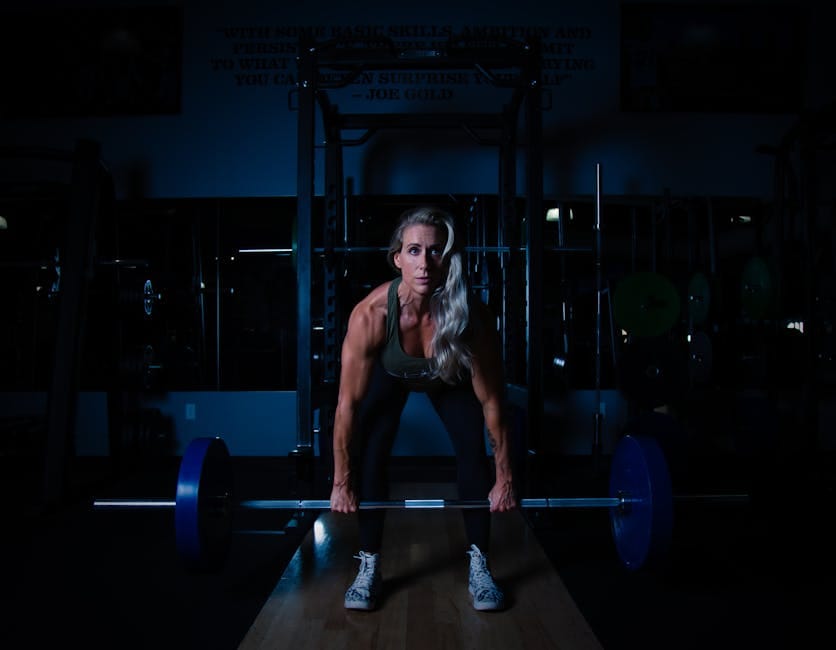
Here is the most common reason women stop seeing results from strength training: they keep doing the same workout, with the same weights, for months on end. The body adapts to a challenge and then has no reason to keep changing. Progressive overload is the principle that fixes this, and despite the intimidating name it just means asking your muscles to do slightly more over time. You do not need to live in the gym to apply it. Three focused sessions a week, done with intent, will take most people a very long way.
What progressive overload actually means
Overload simply means doing more than your body is currently comfortable with, and progressive means nudging that 'more' upward in small, deliberate steps. The mistake is assuming 'more' only means heavier weight. Weight is the most obvious lever, but it is one of several, and the others matter just as much when you are tired, short on time, or training at home with a fixed set of dumbbells.
Strength is a skill your nervous system learns, not just muscle you grow. That is why beginners get stronger so fast — and why patience pays off once the easy gains slow down.
The levers you can actually pull
When you cannot add weight this week, change one of these instead:
- Add reps — if you did three sets of eight last week, aim for three sets of nine or ten before you touch a heavier dumbbell.
- Add a set — going from three sets to four adds real volume without changing the weight at all.
- Slow the lowering phase down to a three-second count, which makes the same weight dramatically harder.
- Shorten your rest between sets, so the muscle works under fatigue.
- And the obvious one, when reps are easy across all sets: add the smallest jump you can, usually 1–2.5kg.
Double progression is the simplest framework to organise all this. Pick a rep range — say 8 to 12 — and stay at the same weight until you can hit the top of that range for every set. Only then do you increase the load and drop back to the bottom of the range. It removes the guesswork entirely.
Why women specifically under-load
Most women I have trained start far too light, partly out of caution and partly because the fitness industry spent two decades selling them pink 1kg dumbbells and 'toning'. Toning is just muscle plus lower body fat; there is no separate toning pathway. If you can do fifteen comfortable reps of something, it is not building much strength. Pick a weight where the last two reps of a set of ten feel genuinely hard. That is the zone where change happens.
Strength training matters even more as women age, because muscle and bone density both decline through the perimenopausal years. Lifting heavy-for-you is one of the few things shown to protect both. This is not vanity training. It is the closest thing to a pension you can pay into with your body.
Keep it sustainable
Progress is not linear, and chasing a new personal best every single session is how you end up injured or burnt out. Build in a lighter 'deload' week roughly every four to six weeks, where you cut the weight or volume and let your body catch up. Track your lifts in a notes app or a cheap notebook, because memory is a terrible coach — you will swear you lifted the same as last time when the log says otherwise. The women who stay strong for decades are not the ones who train hardest for a month. They are the ones who keep showing up, adding a little, and resting when it counts.
A week that puts it into practice
Principles are easy to nod along to and hard to apply at 7am with a dumbbell in your hand, so here is what a realistic week looks like. Three full-body sessions, around 45 minutes each, hitting the major movements with a day between to recover.
Each session, pick one move from each pattern: a squat (goblet or back squat), a hinge (Romanian deadlift or hip thrust), a push (press-up or dumbbell shoulder press), a pull (row or lat pulldown), and one carry or core finisher. Three sets of eight to twelve on each. That is the whole framework — you do not need a different workout every day, you need the same handful of movements done a little better over time.
The double progression lives inside that. Say you start Romanian deadlifts at three sets of eight with 20kg:
- Week one: 3×8 at 20kg, with the last reps genuinely tough.
- Over the next sessions, chase reps at the same weight — 3×9, then 3×10, then 3×11.
- Once you hit 3×12 across every set, add the smallest jump you can, to 22.5kg, and drop back to 3×8.
- Then start climbing the reps again, and repeat the cycle for months.
Slow, unglamorous, and ruthlessly effective. Log every session, because the whole thing falls apart the moment you are guessing what you lifted last time.
Getting stronger is not complicated, but it is specific: do a little more than last time, in whatever way you can manage this week, and write it down. Apply that across three sessions a week and you will be lifting weights in six months that today sound impossible. Start lighter than your ego wants and heavier than your fear suggests.