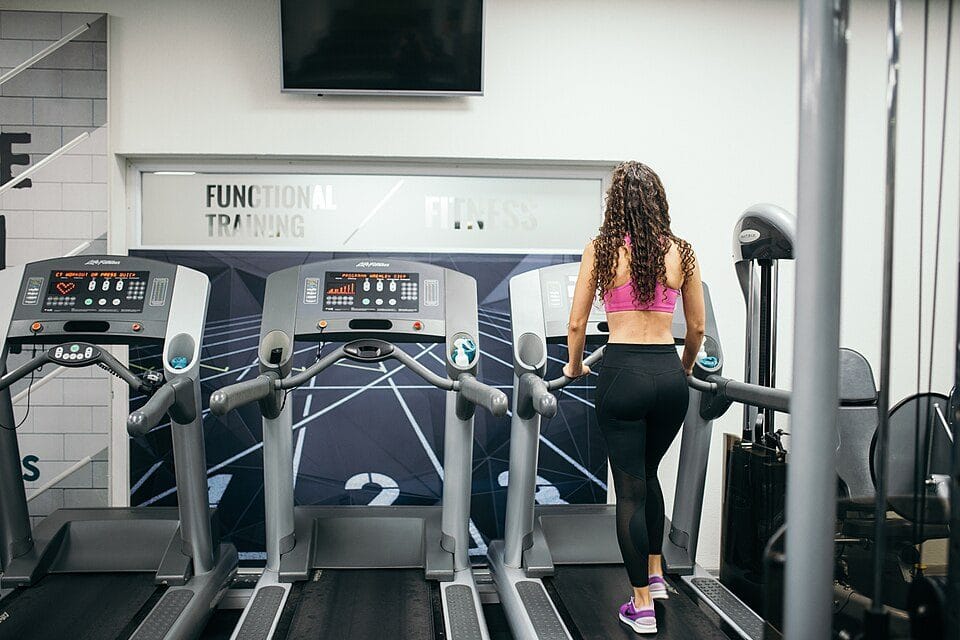
Walk into most gyms at 6 a.m. and you'll see the same split: women grinding through a HIIT class on one side, women loading barbells on the other, and almost nobody jogging at a pace that feels, frankly, a little embarrassing. That's the gap. Zone 2 cardio — slow, sustained, boringly easy aerobic work — is the training input most women lifting seriously have quietly written off, usually because it doesn't produce the soreness or the sweat-drenched shirt that feels like progress. It should be the second pillar of your training, not an afterthought squeezed in when you skip a lifting day.
What Zone 2 Actually Is
Zone 2 refers to an intensity where you're working at roughly 60–70% of your maximum heart rate — the pace at which you could hold a conversation in full sentences, not gasped fragments. For a 35-year-old woman with a rough max heart rate of 185 (using the common 220-minus-age estimate, which is imprecise but good enough for this purpose), that's somewhere around 110–130 beats per minute. Physiologically, this is the zone where your body relies predominantly on fat oxidation through mitochondria in slow-twitch muscle fibers, rather than the glycolytic pathways that dominate during heavier lifting or sprint intervals.
The "talk test" remains the simplest field method: if you can recite a few sentences out loud without needing to pause for air, you're in the right zone. Singing along to whatever's playing means you're going too easy and getting limited aerobic benefit from the session. Only managing single grunted words? You've drifted into Zone 3 or beyond, which trains a completely different energy system.
Why Lifters Skip It — and Why That's a Mistake
The instinct to skip Zone 2 makes sense on the surface. You're already spending four or five hours a week under a barbell, your joints ache, and forty-five minutes of walking on an incline doesn't feel like it's doing anything. But that feeling is the entire point — Zone 2 is supposed to feel unproductive in the moment, because its payoff shows up in recovery capacity, not in next-day soreness. Skip it entirely and you're leaving your aerobic base undeveloped, which shows up later as slower recovery between heavy sets, a higher resting heart rate under fatigue, and a ceiling on how much total training volume your body can absorb. Build a real aerobic base, on the other hand, and your heavy lifting sessions actually improve — not because Zone 2 makes you stronger directly, but because a stronger aerobic system clears lactate faster between sets, letting you recover in 90 seconds instead of three minutes. That's the trade worth making: skip the extra sets of curls and add two Zone 2 sessions instead, and the strength gains won't disappear while the recovery gains show up within six to eight weeks.
The VO2 Max Connection
VO2 max — the maximum rate at which your body can use oxygen during exercise — is one of the strongest predictors of longevity in the research literature, and it declines by roughly 10% per decade after age 30 without targeted training. Zone 2 work, done consistently, is one of the most efficient ways to build the mitochondrial density and capillary network that raise VO2 max over time, precisely because the low intensity lets you sustain the training volume needed to drive that adaptation. Sprint intervals raise VO2 max too, but they can't be done for the same weekly volume without wrecking recovery from your lifting sessions.
A useful benchmark: average VO2 max for women in their 30s sits around 35–40 ml/kg/min, and anything above 45 is considered excellent for that age bracket. You don't need a lab test to track progress — a Garmin, Apple Watch, or Polar chest strap will estimate it reasonably well from your heart rate response during steady-state cardio, and watching that number creep upward over a training block is one of the more satisfying slow-burn metrics in fitness.
How Much You Actually Need
Most of the research on aerobic base-building, borrowed originally from endurance sport science, points to somewhere between 120 and 180 minutes of Zone 2 work per week for meaningful adaptation. That doesn't mean one heroic two-hour session — it means breaking it into pieces that fit around a lifting schedule.
- Two 45-minute incline treadmill walks or steady cycling sessions on non-lifting days
- One 30-minute session tacked onto the end of a lighter lifting day, when your legs aren't already fried from squats
- Walking commutes or dog walks at a brisk-but-conversational pace, which count more than people give them credit for
- A rowing machine works too, though it's harder to stay in Zone 2 on a rower without deliberately holding back the stroke rate
Don't overthink the modality. The heart rate zone matters far more than whether you're walking, cycling, or rowing to get there.
Fitting It Around Strength Training
Here's the part that trips people up: doing Zone 2 and heavy lifting on the same day, in the wrong order, can blunt your strength gains through what exercise physiologists call the interference effect. Doing 40 minutes of steady cardio immediately before a heavy squat session will leave you weaker on the bar — your central nervous system and glycogen stores take the hit. The fix is sequencing: lift first, cardio after, or separate them by at least six hours if your schedule allows a second session. The interference effect is real, but it's also smaller than most lifters assume, and the research on it gets more nuanced the closer you look at low-intensity aerobic work specifically. Studies on concurrent training consistently show the interference effect is dose-dependent and shows up mainly with high-volume, high-intensity cardio stacked directly against heavy lower-body lifting. Three Zone 2 sessions a week, kept genuinely easy and sequenced after your lifts rather than before them, produce a measurable interference effect that's small enough to be essentially irrelevant for anyone who isn't training for a powerlifting meet.
Tracking It Without Overthinking It
You already own the only tool this requires — a watch that reads heart rate — you've just never used it for something this unglamorous.
You don't need a lab-grade metabolic cart to train this correctly. A chest-strap heart rate monitor is more accurate than a wrist-based sensor, particularly during steady walking or cycling where wrist movement can throw off optical readings — Polar's H10 and Garmin's HRM-Pro are the two most reliable options in the $80–100 range. Perceived exertion works nearly as well once you've calibrated it against a monitor for a few sessions: Zone 2 should sit at roughly a 3 or 4 out of 10 on a subjective effort scale, noticeably easier than anything you'd call "cardio" in the traditional sense.
Track two things over an eight-week block: the pace or resistance you need to hit your target heart rate, and how quickly your heart rate drops in the two minutes after you stop. Both should improve as your aerobic base builds — you'll find yourself walking faster at the same heart rate, and your heart rate recovery number will climb from something mediocre into a range that genuinely reflects a fitter cardiovascular system. Neither improvement happens on the same timeline as strength gains, and that's exactly why this training gets abandoned so often before it has a chance to pay off.
Where It Actually Fits This Week
Pick two days this week that aren't your heaviest lifting sessions and add 30–40 minutes of genuinely easy cardio at the end, not the beginning. Wear a heart rate monitor if you have one, keep it under 130 beats per minute, and resist every urge to speed up when it starts feeling too easy — that discomfort with "easy" is the actual signal you've been training the wrong system for years. Give it six weeks before judging whether it's working; the changes show up in recovery and heart rate numbers long before they show up on the scale or in the mirror.