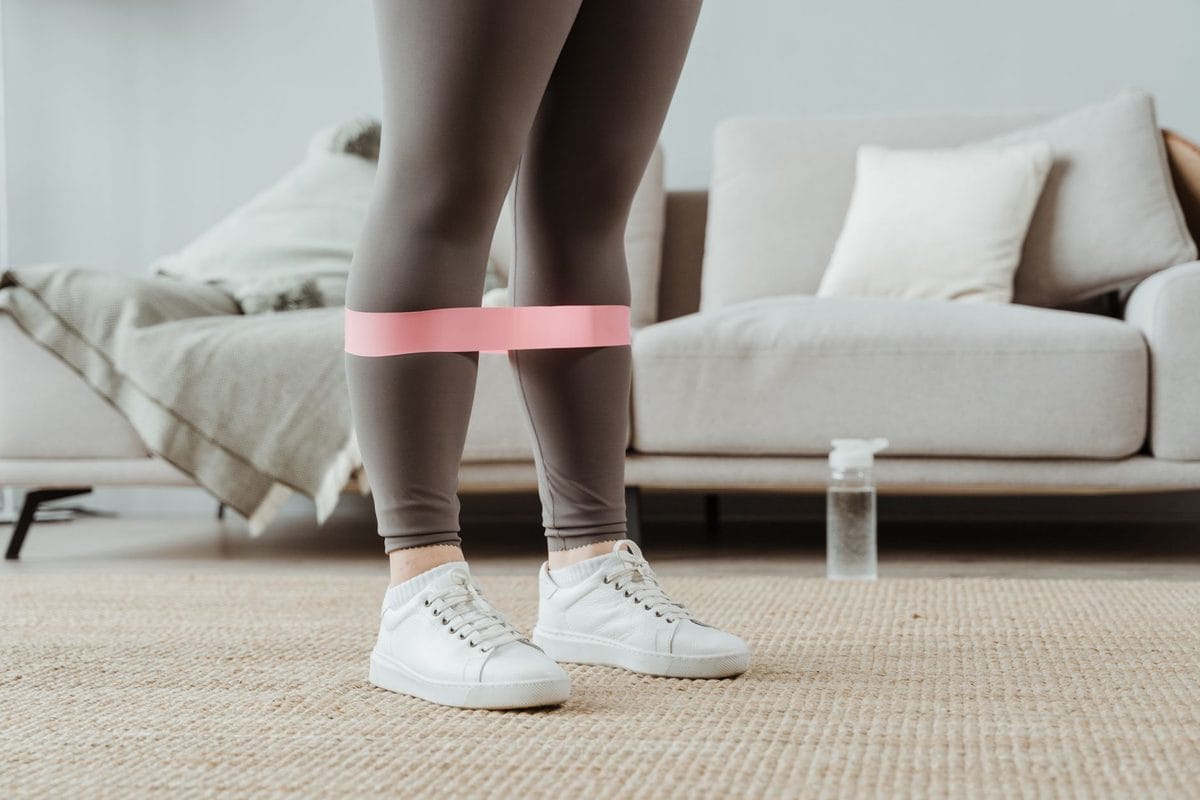
Tie an elastic cuff around the top of your thigh, pick up a dumbbell you'd normally use as a warm-up, and grind through a set that leaves your legs shaking by rep fifteen. That's the entire premise of blood flow restriction training, and the fact that it works is still catching experienced lifters off guard — including plenty of coaches who assumed heavy weight was non-negotiable for building real strength.
Why Restricting Blood Flow Builds Muscle at All
The cuff isn't there to cut off circulation completely — that would be dangerous and counterproductive. Instead it's inflated to a percentage of a person's individual limb occlusion pressure, typically somewhere in the 40–80% range, which is just enough to slow venous return while arterial blood still flows into the muscle. Blood pools in the tissue faster than it drains out. Metabolic byproducts — lactate, hydrogen ions, the stuff that makes your legs burn on the last few reps of a hard set — build up far faster than they would under the same light load without a cuff. And that local, oxygen-starved environment appears to trick the nervous system into recruiting fast-twitch muscle fibers that would normally stay dormant until the load got heavy. Under normal loading, your body follows the size principle: small, fatigue-resistant motor units fire first, and the big power-producing fast-twitch units only kick in once the weight demands it. Occlusion short-circuits that sequence. A 20-kilogram set can start recruiting the same fiber types as a near-maximal deadlift, simply because the muscle is already gasping for oxygen by rep eight.
Where This Actually Started
Blood flow restriction training isn't a wellness-industry invention from the last five years — it traces back to Japan, where a practitioner named Yoshiaki Sato began experimenting with occlusion bands decades before Western strength coaches took any notice, eventually formalizing it into what's marketed today as KAATSU training. Japanese researchers spent years studying it in hospital and rehabilitation settings before it crossed over into general strength and conditioning. That history matters, because it means the bulk of the early research wasn't done on healthy gym-goers chasing bigger arms — it was done on people who couldn't tolerate heavy loading at all: post-surgical patients, older adults with sarcopenia, and athletes recovering from reconstructive procedures. It also found an unusual second audience early on: bed-rest and spaceflight researchers, who needed a way to prevent muscle and bone loss in people who physically couldn't lift heavy weight, whether because of prolonged hospitalization or time spent in microgravity. It took years for exercise scientists outside Japan to pick the method up seriously, and once they did, publication accelerated fast — from a handful of papers a year to a steady stream of trials across strength and conditioning, physical therapy, and sports medicine journals. The terminology splintered along the way too: you'll see it called BFR training, occlusion training, vascular occlusion training, or by a specific commercial system's brand name, and while the marketing differs, the underlying physiology is the same cuff-and-pressure principle regardless of what's printed on the box.
What the Evidence Actually Supports
Across dozens of trials comparing low-load BFR training against traditional heavy-load resistance training, the strength and size gains land in a similar range — not identical, but close enough that researchers stopped being surprised by it years ago. The load used is usually 20–30% of a one-rep max, a fraction of what you'd need to lift without the cuff to get comparable results. What's less settled is how BFR stacks up against heavy training for maximal strength in already well-trained lifters; the advantage narrows the stronger someone already is, and nobody's claiming BFR replaces a heavy squat day for a competitive powerlifter. Where it earns its keep is anywhere heavy loading isn't an option — a joint that can't tolerate axial load yet, a tendon still healing, a nervous system that needs volume without the orthopedic cost.
The Practical Protocol
Most published BFR protocols follow a similar rep structure: one set of around 30 reps, followed by three sets of 15, with short rest periods of 30 to 60 seconds between them, all performed at that 20–30% load. It looks deceptively easy for the first ten reps and stops feeling easy fast. Cuffs go on the upper thigh for lower-body work and the upper arm for upper-body work — never mid-limb, and never left inflated for more than about 15–20 minutes at a stretch. Sessions typically run two to three times per week per muscle group, similar to a standard hypertrophy frequency.
- Load: roughly 20–30% of one-rep max, far below what traditional hypertrophy training uses
- Cuff placement: proximal thigh or proximal upper arm, never at the knee or elbow
- Structure: a high-rep first set followed by shorter, harder sets as fatigue accumulates — burning and fatigue arrive early, and that's the point, not a sign something's wrong
- Frequency: two to three sessions per muscle group weekly, comparable to conventional hypertrophy work, though some rehab protocols run it daily under clinical supervision
Where BFR Earns Its Keep — Joint-Friendly Training and Rehab
This is the application with the deepest evidence base. Physical therapists have used BFR for years to slow the muscle loss that follows ACL reconstruction, knee replacement, and other procedures where a patient physically cannot load a joint heavily during early recovery but still needs to preserve as much quadriceps and hamstring mass as possible. Without some form of loading, muscle atrophy after knee surgery can be dramatic within just a few weeks — and once that strength is lost, it takes far longer to rebuild than it did to lose. BFR gives a rehabbing joint a way to keep training the muscle around it without asking the joint itself to handle real load. The same logic extends to older women managing joint pain, women returning to training after a long injury layoff, or anyone whose shoulders, knees, or hips simply don't tolerate heavy barbell work the way they used to.
Fitting It Into a Normal Training Week
BFR isn't meant to replace your whole training week, and treating it that way is one of the more common mistakes people make once they've tried it and liked the pump. Most coaches who use it well slot it in as an accessory tool: an extra stimulus for a lagging muscle group on a day you're already in the gym, or a way to keep training volume up on a week when your knees, shoulders, or lower back need a break from heavy compound lifts. A woman deadlifting twice a week might add a short BFR arm or glute session on an off day without adding meaningful fatigue to her main lifts, since the load is so light that recovery cost stays low even though the muscle burn feels intense in the moment. Travel weeks are another obvious fit — a set of resistance bands and a pair of cuffs pack into a gym bag in a way a barbell never will, and the stimulus holds up reasonably well even without access to real equipment. What doesn't work is stacking BFR on top of an already full heavy-lifting program and expecting it to add strength for free; more volume still costs recovery, cuff or no cuff, and ignoring that is how people end up unnecessarily fried by week three.
The Postpartum and Injury-Return Question
BFR shows up constantly in postpartum fitness conversations, and it's easy to see why — light loading, a real strength stimulus, minimal joint stress. But the evidence specifically in postpartum women is much thinner than the general BFR literature would suggest. Most of what gets applied to postpartum training is extrapolated from orthopedic rehab research and general resistance-training studies, not from a dedicated body of trials on women returning to training after birth. That doesn't mean the extrapolation is wrong — the underlying mechanism doesn't care whether a joint is lax from pregnancy hormones or from a torn ligament — but it does mean anyone telling you BFR is "proven" for postpartum return-to-training specifically is overstating what's actually been studied. Treat it as a reasonable, physiologically sound option worth discussing with a pelvic floor physical therapist or postpartum-trained coach, not as a guaranteed shortcut.
Who Should Skip It
Pregnancy is on that list, full stop.
BFR isn't appropriate for everyone else either, and the remaining contraindications aren't minor technicalities. Anyone with a history of blood clots or deep vein thrombosis should avoid it entirely. So should people with uncontrolled high blood pressure, sickle cell trait or disease, or existing vascular disease — the whole method depends on manipulating blood flow, and that's precisely the wrong intervention for a circulatory system that's already compromised.
If you're managing any of those conditions, or you're simply not sure whether you fall into one of them, this is a conversation for a doctor before it's a conversation for a coach.
Getting Started Without Guessing
Skip the DIY approach of wrapping a resistance band or a pharmacy blood pressure cuff around your leg and guessing at pressure — the calibration matters more than most people assume, and an incorrectly pressurized cuff can undershoot the stimulus or, worse, overshoot into genuinely risky territory. A trained BFR practitioner or physical therapist sets cuff pressure relative to your individual limb occlusion pressure, not a number that happened to work for somebody else's leg. Look for a physical therapist or strength coach who's specifically certified in BFR methodology — KAATSU and B Strong are the two systems most practitioners train on — rather than someone improvising with generic elastic wraps. It's a narrow, specific tool — not a replacement for heavy training when heavy training is available to you, but genuinely useful when it isn't.