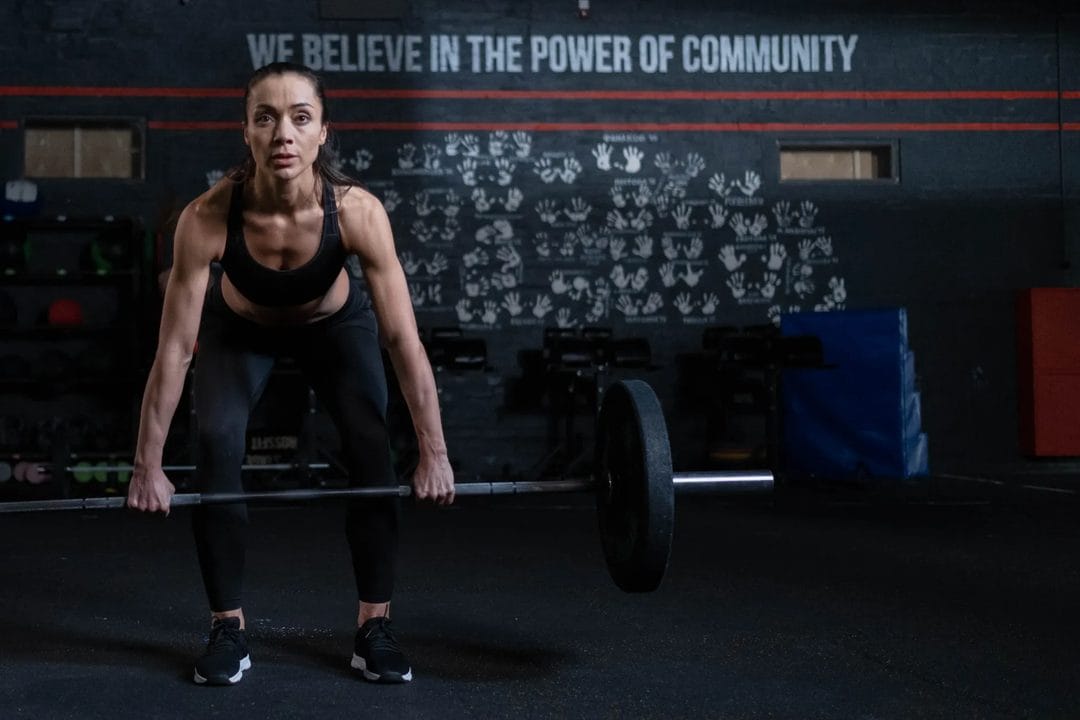
A 2015 study published in The Lancet tracked nearly 140,000 adults across 17 countries and found that grip strength predicted all-cause mortality more accurately than systolic blood pressure — a finding that surprised even the researchers running it. For women specifically, grip strength also tracks closely with bone density and fall risk after age 50, which makes it one of the few fitness metrics that actually says something about your health decades out, not just how much you can lift this week.
Why grip strength matters more than it sounds like it should
Grip strength isn't really about your hands — it's a proxy for total-body muscle quality, because gripping hard requires coordinated activation from your forearms up through your shoulders and core. Researchers use it as a marker precisely because it's easy to measure with a hand dynamometer and correlates strongly with strength you can't measure as conveniently, like the muscle reserve that determines whether a fall turns into a bruise or a hip fracture. That correlation is the entire reason grip strength shows up in longevity research — not because weak hands directly cause health problems, but because grip strength tracks the muscle mass and neuromuscular function that actually do.
Women lose grip strength faster than men after menopause, largely because the drop in estrogen accelerates muscle loss across the whole body, and grip is often the first place that decline becomes measurable — years before it shows up in a DEXA scan or a fall. A woman in her 30s with an average grip strength around 27-30 kg per hand can expect that number to decline by roughly 1.5 percent per year without resistance training, and the compounding effect over two decades is significant: by 60, an untrained grip can sit closer to 18-20 kg, right around the threshold researchers associate with increased frailty risk.
Where you actually stand: grip strength benchmarks
A hand dynamometer costs $30-50 and gives a genuinely useful number to track — most gyms with a physical therapy department have one, and some CrossFit boxes keep one on hand for exactly this reason. As a general benchmark, women aged 20-39 average 25-30 kg per hand, women 40-59 average 20-27 kg, and women over 60 average 15-23 kg, though these ranges vary by testing protocol and hand dominance. Elite female powerlifters and climbers routinely test above 45 kg, which shows how much headroom exists above the population average when grip is trained deliberately rather than left to whatever daily life happens to demand.
If you don't have access to a dynamometer, a dead hang from a pull-up bar is a rough but useful substitute: 30 seconds is a reasonable baseline for an untrained adult woman, 60 seconds suggests above-average grip and shoulder stability, and anything past 90 seconds puts you well ahead of most gym-goers, trained or not.
How to actually train it
Farmer's carries are the single best return on investment for grip training, because they load grip endurance under a real, transferable pattern instead of isolating the forearms in a way that doesn't translate to daily life. Pick up a pair of dumbbells at roughly 50-60 percent of your bodyweight combined, walk 40 yards, rest 90 seconds, and repeat for four rounds — most women are shocked at how much harder this is on the grip than on the legs or core, which is exactly the point.
- Dead hangs, 3 sets of max-effort holds, 2-3 times a week — this is the cheapest, simplest grip exercise that exists and requires nothing but a pull-up bar.
- Plate pinches: hold two 10lb plates smooth-side-out, pinched between fingers and thumb, for time — this targets pinch grip specifically, which farmer's carries and dead hangs mostly skip.
- Mixed-grip deadlifts, one hand over and one hand under the bar, done sparingly (once a week, light loads) to build asymmetric grip endurance without relying on straps.
- Rice bucket work — plunging hands into a bucket of dry rice and opening and closing the fist repeatedly — sounds almost too simple to matter, but it's a staple in climbing and combat sports rehab programs for a reason: it works the small stabilizing muscles that bigger lifts skip entirely.
Grip training three times a week is enough. More than that, and forearm tendons — which recover more slowly than the larger muscles around them — start accumulating fatigue faster than they can adapt, and that's how people end up with a case of golfer's or tennis elbow that sidelines grip work for a month.
Building grip work into a week you'll actually stick to
Tacking a grip-specific finisher onto the end of an existing lifting session works better for adherence than treating grip training as a separate workout most people will eventually skip. After a lower-body day, add three rounds of farmer's carries; after an upper-body day, finish with dead hangs and a set of plate pinches. This costs five to eight extra minutes per session and avoids the common failure mode of "I'll do grip work on its own day," which quietly disappears from the calendar within three weeks for almost everyone who tries it that way.
A pair of Captains of Crush grippers ($20-28 depending on resistance level) is worth the investment if you want progressive overload without loading a whole barbell — start with the Guide level (60 lbs of resistance) and most untrained women will find it genuinely challenging for the first month. Chalk helps on carries and hangs once grip becomes the limiting factor before your legs or back do, and a $10 block lasts most people the better part of a year.
The part the longevity headlines skip
Grip strength is a marker, not a magic lever — training your grip in isolation, without addressing overall strength training, sleep, and protein intake, won't move the mortality-risk needle the way the population studies imply. The Lancet study and others like it are observational: they show that people with strong grips tend to live longer and have fewer falls, not that strengthening your grip specifically causes those outcomes. The actual mechanism running underneath both is total muscle mass and neuromuscular health, and grip strength happens to be the easiest piece of that system to measure with a $40 dynamometer.
That doesn't make grip training a waste of time — it's genuinely useful, especially for carrying groceries, opening jars, and catching yourself on a railing instead of the ground. But if the goal is the long-term health outcome the headlines promise, grip work belongs alongside squats, deadlifts, and a protein target around 0.7-1g per pound of bodyweight, not instead of them. Treating a dead hang PR as a standalone health intervention misses what the research actually measured.
Signs your grip is holding back your other lifting
If your deadlift or pull-up numbers have plateaued while the rest of your training feels manageable, weak grip is worth ruling out before assuming it's a back or lat issue. A common tell is the bar rolling out of your fingers on the last rep of a deadlift set well before your legs or back feel fatigued, or needing straps earlier in a session than your program actually calls for. Recording a few working sets on video and watching where the failure actually happens — grip slipping versus the bar path breaking down — usually answers the question faster than guessing from how a lift feels in the moment.
Grip fatigue also compounds across a session in a way that's easy to miss: a hard set of pull-ups early in a workout can quietly sap the grip endurance you need for deadlifts twenty minutes later, even though the muscles involved feel unrelated. Structuring a session so grip-intensive exercises don't stack back-to-back — deadlifts before pull-ups, not after — sidesteps this without needing to add a single extra exercise to the program.