Ask most women what core training looks like and they'll describe some version of lying on a mat doing crunches until their neck aches. Three sets of twenty, maybe a plank held until the shaking starts, and a vague sense that this is what you do for "abs." It's the most common approach to core work, and it's also the least useful one if your goal is a midsection that actually holds up when you're carrying shopping up three flights or bracing under a loaded barbell.
The confusion comes from a simple misunderstanding of what your core is for. The muscles wrapping your trunk — the deep transverse abdominis, the obliques, the erectors running up your spine — spend most of their working life doing one thing: stopping your torso from moving when something tries to move it. They're a brace, not an engine. Train them like a brace and everything else you lift gets stronger.
The job is resisting movement, not creating it
Strength coaches sort core work into categories, and the useful ones for most women are anti-extension (stopping your lower back from arching), anti-rotation (stopping your torso from twisting) and anti-lateral-flexion (stopping you from bending sideways). A crunch trains none of these — it's spinal flexion under almost no load, which is exactly the movement your spine does thousands of times a day already.
This is why a woman who can crunch for days often still rounds and collapses the moment a deadlift gets heavy. Her abs can shorten; they just can't hold. The fix is to spend your core training learning to stay rigid while your limbs do the work, because that's the demand every real lift and most of real life actually places on you.
Four movements that earn their place
You don't need fifteen exercises. You need a handful done with intent:
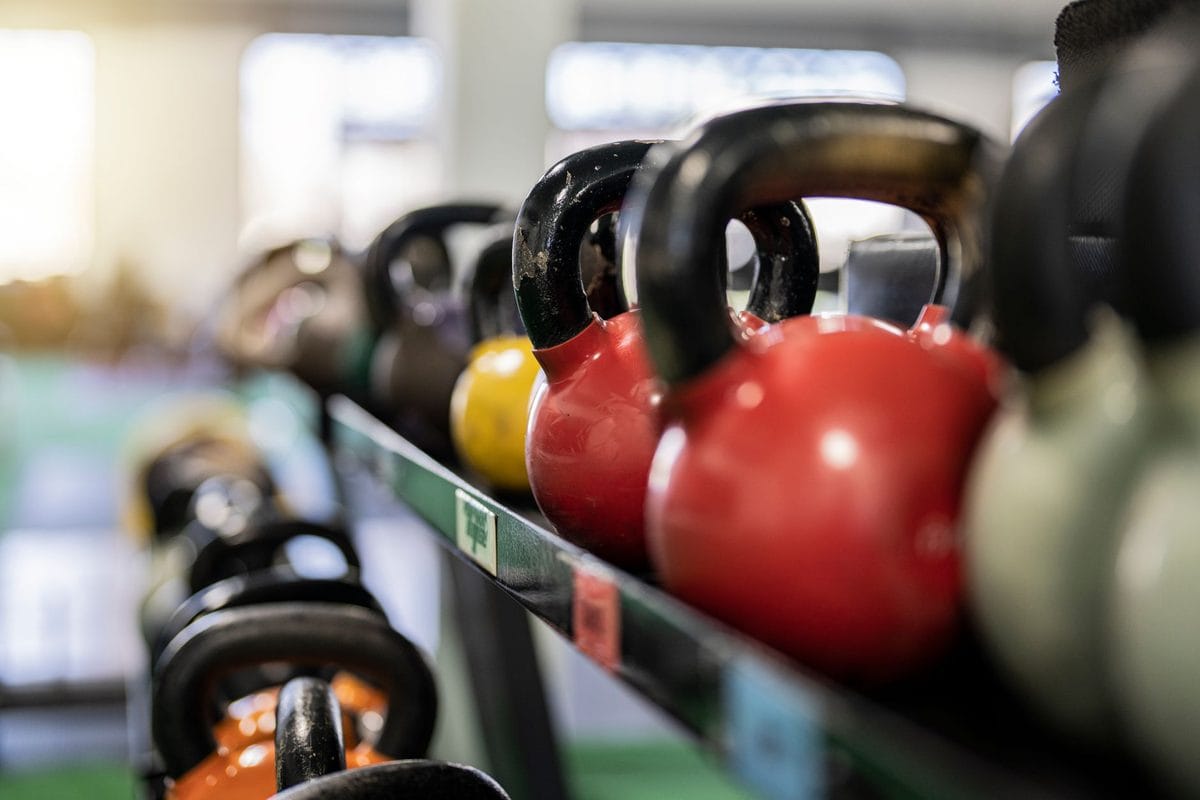
- Loaded carries. Pick up a heavy dumbbell or kettlebell — start around 12–20 kg in one hand — and walk fifty metres without leaning. The suitcase carry trains anti-lateral-flexion and grip at the same time, and it's the single most underrated core builder in the gym.
- Pallof press. Stand side-on to a cable or band, press the handle straight out from your chest, and resist the pull that wants to rotate you. Slow, unglamorous, ruthlessly effective for anti-rotation.
- Dead bug. On your back, opposite arm and leg lowering while your lower back stays glued to the floor. Looks easy, isn't, and teaches the bracing pattern you'll use under every squat.
- Front-loaded variations like the goblet squat or a plank with a weight on your back, which sneak heavy anti-extension work into movements you're doing anyway.
Notice none of those are crunches. That's deliberate.
Breathe and brace like you mean it
Here's the part nobody teaches in a body-pump class: how you breathe under load is itself a core skill. Before a heavy lift, take a breath into your belly — not your chest — and tighten everything around it as if you're about to be punched. That intra-abdominal pressure is what turns your trunk into a solid pillar instead of a soft tube. Hold it through the hard part of the rep, then breathe out at the top.
Practise this on lighter sets until it's automatic, because trying to learn bracing at the same time as fighting a near-maximal weight is how backs get tweaked. A woman who braces well with 40 kg will out-lift a woman with "stronger abs" who breathes wrong every time.
Where the summer-six-pack thing actually fits
Let's be honest about the elephant in the gym: a lot of core training is really about wanting visible abs by July. Fair enough. But muscle definition is a body-fat question, decided mostly in the kitchen, and you can have a genuinely strong, well-trained core under a soft layer that no amount of crunching will reveal. The flip side is the good news — train your core for strength with carries and presses, eat in a way that gradually drops body fat, and the definition shows up as a side effect of getting strong rather than the other way round.
So skip the floor-bound crunch marathon. Pick up something heavy, walk with it, press against a band that's trying to twist you, and learn to brace like your spine depends on it — because it does.