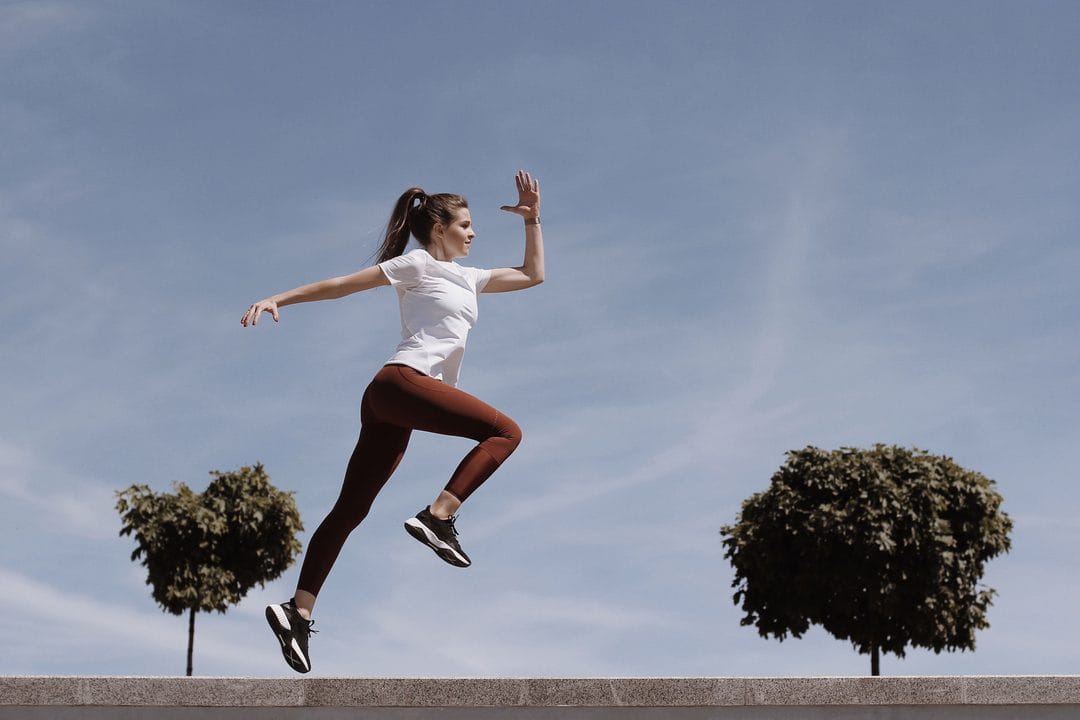
Watch a women's soccer match closely and you'll notice it eventually: a player plants her foot to cut toward goal, her knee buckles inward without anyone touching her, and she's on the ground. No collision, no tackle — just a landing that went wrong. Orthopedic surgeons see this pattern so often in female athletes that it has its own shorthand in sports medicine clinics: the non-contact ACL tear.
The gap is real, and it's been documented for thirty years
Studies tracking college and high school athletes across comparable sports have consistently found that women tear their anterior cruciate ligament two to six times more often than men, with the widest gaps showing up in soccer and basketball — the sports built around cutting, pivoting, and single-leg landings. This isn't a one-off finding from a small sample. Researchers have been measuring it since the mid-1990s, across different countries, age groups, and levels of competition, and the ratio hasn't meaningfully closed. Early explanations leaned heavily on the idea that women were simply "less athletic" or less conditioned than their male counterparts, a theory that collapsed once researchers started comparing elite female athletes against recreational male players and still found the same gap. What has changed over three decades is the understanding of why it happens, and that shift in understanding now shapes how the better strength and conditioning programs are built. It also explains why so much of the older prevention advice — stretch more, strengthen your quads, wear a brace — turned out to miss the actual mechanism almost entirely.
The financial and physical cost of an ACL tear makes the gap worth taking seriously beyond curiosity. Reconstruction surgery, roughly six to nine months of structured rehabilitation, and a real risk of early-onset knee osteoarthritis decades later are the standard package. A teenager who tears her ACL at 16 faces a meaningfully higher chance of knee arthritis by her 40s than a teammate who never does — that's not a scare tactic, it's the finding from long-term follow-up studies on ACL reconstruction patients.
Anatomy, hormones, and movement patterns — and where the evidence actually gets thin
Three explanations get cited most often, and they carry very different amounts of evidence behind them. The anatomical argument points to a wider pelvis changing the angle at which the thighbone meets the shinbone (the Q-angle), plus a narrower intercondylar notch in many women's knees, which can mean less room for the ACL to move without impinging on surrounding bone. The neuromuscular argument, associated with researcher Timothy Hewett and his work at Cincinnati Children's, focuses on landing mechanics: female athletes tend to land from a jump with straighter knees and more inward collapse — dynamic knee valgus, in clinical terms — relying on the quads to absorb force instead of sharing the load with the hamstrings and glutes.
Then there's the hormonal theory, and this is where things get genuinely contested. The idea is that estrogen and relaxin fluctuations across the menstrual cycle loosen ligament tissue, and that ACL tears cluster in certain cycle phases as a result. It's an intuitive story, and it gets repeated constantly in coaching circles. The research backing it, though, is mixed — some studies find a modest increase in injury risk around ovulation, others find no meaningful pattern once you control for training load and playing time. Treat the hormonal explanation as plausible and under-proven, not as settled science, because that's what the data currently supports.
What actually moves the needle: neuromuscular training
The strongest evidence in this entire field points to one intervention: structured neuromuscular training programs run as part of the regular warm-up, not as a separate add-on session. The two most studied are the PEP Program (Prevent injury, Enhance Performance), developed by the Santa Monica Orthopaedic and Sports Medicine Research Foundation, and FIFA 11+, built by FIFA's medical research center for soccer specifically. Both replace a standard jog-and-stretch warm-up with roughly 15 to 20 minutes of plyometrics, strength work, balance drills, and — critically — coached landing technique.
Skip the programs that promise results from a single workshop or a laminated poster taped to the gym wall. The research behind PEP and FIFA 11+ measured effects after a full season of consistent use, three times a week, not after a few sessions.
The mechanism is what makes this more convincing than most injury-prevention claims in sports science: these programs specifically retrain how an athlete decelerates and lands, teaching bent-knee absorption instead of the stiff-legged, knock-kneed pattern that puts the ACL under load. A landmark study on the PEP program in youth female soccer players found a roughly 74% reduction in ACL injuries in the first year of consistent use compared with teams that trained normally. That number gets repeated often enough that it's worth putting in context: it came from one well-designed but relatively small trial, and it represents a best-case result under close coaching supervision. Later meta-analyses across multiple programs and sports have generally found reductions in the 50–60% range — lower than that first standout number, but still the largest effect size of anything tested against ACL injury risk, including bracing, shoe choice, or playing surface changes. For comparison, the evidence behind knee bracing as a stand-alone prevention tool is thin enough that most sports medicine physicians no longer recommend it for otherwise healthy athletes. Neuromuscular training doesn't have that problem — the effect shows up study after study, in different countries, with different coaching staffs running the sessions.
What a good program actually looks like
- Plyometric drills that emphasize soft, quiet landings — coaches watching and correcting knee position in real time, not just counting reps
- Single-leg balance and stability work, since most non-contact ACL tears happen off one leg, not two
- Deceleration and cutting technique drilled at game speed, because slow-motion technique work doesn't transfer to a sprint-to-cut situation
- Hip and glute strengthening — a weak gluteus medius is one of the more reliably measured contributors to knee valgus during landing, and it shows up in the research far more consistently than any single hormonal marker
A general strength routine that never touches landing mechanics doesn't count, even if it's demanding. Plenty of well-conditioned athletes with strong squats and deadlifts still tear their ACL, because raw strength and controlled deceleration are not the same skill.
Return to sport: the timeline matters more than most athletes are told
For athletes who do tear an ACL, the reconstruction itself — usually with a graft from the patellar tendon, hamstring tendon, or quad tendon — is only the start. Standard guidance sets return to sport at nine to twelve months post-surgery, but a growing body of research argues the calendar is the wrong metric entirely. Criteria-based return protocols, which require an athlete to hit specific strength, hop-test, and movement-quality benchmarks before clearance rather than just waiting out a fixed number of months, are associated with meaningfully lower re-injury rates.
That distinction matters because the numbers for young athletes who return early are not gentle. Somewhere between one in six and one in four athletes under 25 who return to competitive cutting and pivoting sports go on to suffer a second ACL injury — either a re-tear of the reconstructed knee or a fresh tear in the other one — within the following two years. Clearing an athlete because nine months have passed on the calendar, without confirming she's actually hitting 90% strength symmetry and passing hop tests clean, is how that second injury happens.
What to actually ask for
If you're an athlete, a parent, or a coach evaluating a training program or a return-to-play plan, the questions worth asking are specific. Does the warm-up include coached landing mechanics, not just stretching? Is single-leg stability work part of the routine, every week, not occasionally? For anyone coming back from surgery: is clearance based on strength and movement testing, or just a date on a calendar?
None of this eliminates risk entirely — no program does, and any athlete or coach claiming otherwise is overselling it. What three decades of research does support is that the gap between men's and women's ACL injury rates isn't fixed biology playing out unchanged. It's a gap that structured, consistent, technique-focused training has repeatedly narrowed in the studies that bothered to measure it properly.