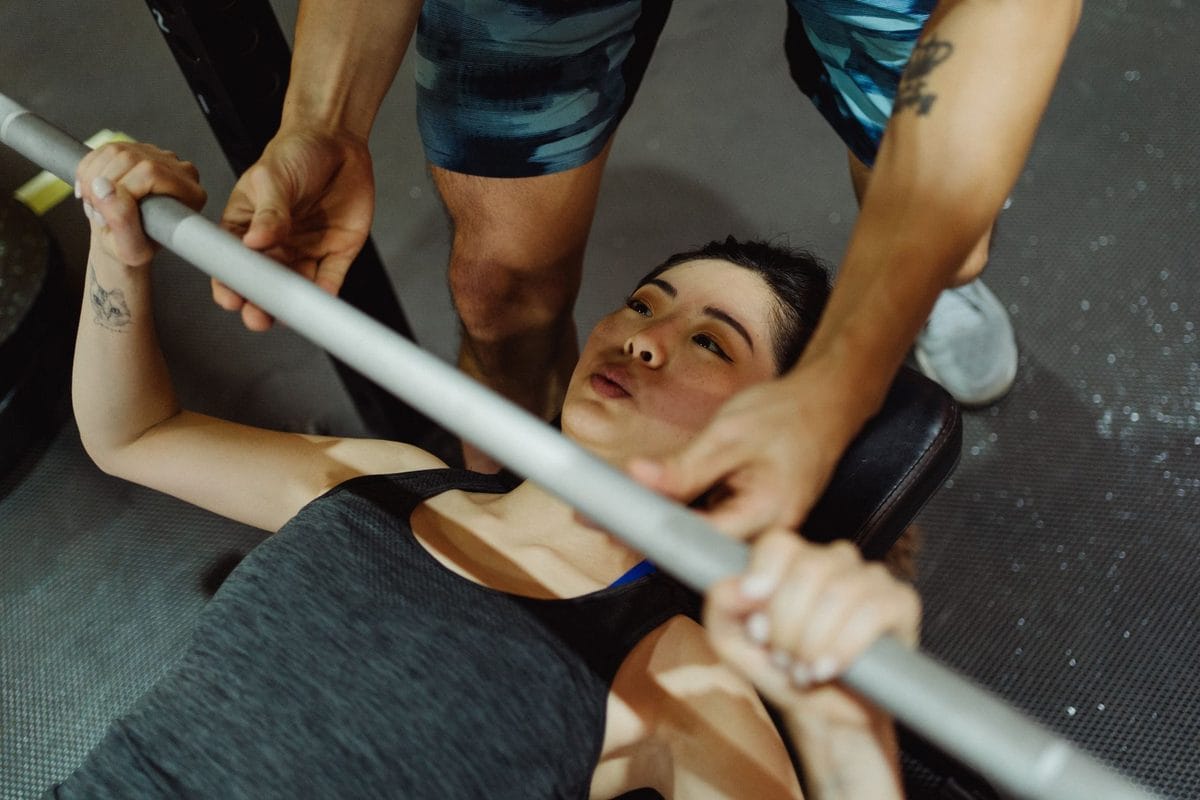
The set that feels like it should work
Picture a gym on a quiet weekday morning. A woman lies back against a padded bench, the barbell rolling over her hips, and she starts pushing. Within a few reps her lower back is burning, her hamstrings are complaining and her glutes feel oddly distant. She assumes the weight is simply too heavy, so she takes the bar off and goes back to the leg press. Most people who give up on the hip thrust have been in this exact position, and the frustrating part is that the exercise itself is excellent. The problem is almost always the setup, which is easy to get slightly wrong and easy to fix once you know what to look for. This article walks through where the load should sit, how your feet and ribs change the result, and the errors that send the work to the wrong place.
Your glutes only work where the hips bend
The glutes do most of their work when your hips extend, which means driving the pelvis up toward the ceiling. The barbell adds resistance right over that joint, so the bar's position decides whether the force passes through the glutes or through your spine. If the bar drifts too far toward the stomach or too far toward the knees, the geometry changes and another muscle group takes the job. That is the part most instructions skip, because they show the finished picture and not the reasons behind it.
Once you understand that the bar is a lever over the hip joint, the adjustments start to make sense. You stop copying a photo and start checking what each change does to the line of force. That shift is what turns a sore, unsatisfying set into one where you can feel the squeeze exactly where you want it, rep after rep.
Where the pad goes
Roll the pad to sit on the crease where your thigh meets your hip, not onto the soft part of your stomach. A folded towel over the bar can work in a pinch, but a dedicated pad keeps the bar steady and reduces the chance of it sliding during the set. If the bar sits on your abdomen, every rep turns into a small crunch under load, and your lower back picks up the extra stress.
Check the position before you lift. Lie down with the bar unloaded, then look at where it crosses your body. The centre of the bar should run roughly over the hip bones, and it should roll cleanly without shifting sideways. A bar that wobbles from one side to the other is telling you the setup is off, not that your core is weak.
Feet, shins and the top of the rep
Feet placement is where most setups quietly go wrong.
Set your feet flat on the floor with your heels roughly under your knees. From there, adjust the distance until your shins sit close to vertical at the top of the rep. If your feet are too far away, your shins lean forward, your hamstrings take over the lift and your glutes get a shorter range of work. If your feet are too close, the top position feels cramped, and you may be tempted to pull the bar with your back instead of pushing through your heels.
Some lifters with long thigh bones find a slightly wider stance more comfortable, and that is a reasonable adjustment. The test is simple: at the top, your glutes should be squeezed and your ribs should be down, with no visible arch in the lower back. Chasing a deeper bottom position by flaring the ribs will not improve the glute work, and it usually moves the stress into your lumbar spine. Stop the rep where the squeeze is strongest, not where the bar happens to be highest.
The errors that send the work to your lower back
Most lower back complaints in hip thrusts come from the same handful of mistakes. Read through this list before your next session, and check one or two of them each time you set up.
- Your ribs flare up and the lower back arches at the top, which hands the work to your spine.
- Feet too far from the bench, so the shins lean and the hamstrings do the lifting.
- A bar pad so thin that the hip bone becomes the only point of contact.
- Chin dropping forward, which tenses the neck and upper back in ways that do not help the lift.
The first error is the most common, and the easiest to fix with a single cue. Before each set, think about pulling your ribcage down toward your hips, as though you were zipping up a tight jacket. Many lifters find the back stops hurting within a session of this, which tells you the spine was doing a job that belongs to the glutes.
Load it gradually, and let the setup lead
Once the setup feels stable, add weight in small steps, and keep the position identical each time. A heavier bar on a poor setup just makes the same mistakes louder. Many women start by practising the movement with bodyweight or a light bar, focusing on the squeeze at the top, before they touch heavy loads. That practice is not a step backwards. It is the fastest route to lifting heavy without a sore back.
Progress should be measured in consistency rather than in one heroic session. Log the bar position, the foot placement and the load, so that you can repeat what worked. If the same set feels different on two days, check the setup before you blame the weight or your recovery. Fatigue changes how you move, and that is why a simple note about the setup pays off over months. Track how the set felt as well as the numbers: a good hip thrust leaves the glutes sore the next day, while a poor one leaves the back tight. Over time those notes become your own guide, more useful than any general list. Film one set from the side every few weeks, because the camera sees the rib flare that you cannot feel from inside the movement.
When you do not have a bench
A bench is convenient, not essential. Never load a barbell onto furniture that can tip or slide, though. Use the floor for floor bridges with a loaded bar, which give you the same movement pattern through a shorter range and are a good way to learn the squeeze before you invest in equipment. Resistance bands looped above the hips also work, although the load feels different, so adjust the tension to match the effort you want. Whatever you use, the body position stays the same: upper back supported, feet flat, hips driving up.
A quick setup check before every set
Run through three checks each time you set up, and the rest of the set tends to take care of itself.
- Pad on the hip crease, with the bar rolling over the hip bones.
- Feet flat, heels under the knees, and shins close to vertical at the top.
- Ribs down, glutes squeezed and neck long for the whole rep.
Do the check on your very first warm-up set, not when the weight is already heavy. Then lift, film one set and compare it with the last time. Make the change you need, and write it down before you rack the bar.